Showing posts with label Zenaida Yanowsky. Show all posts

Sunday, January 29, 2017

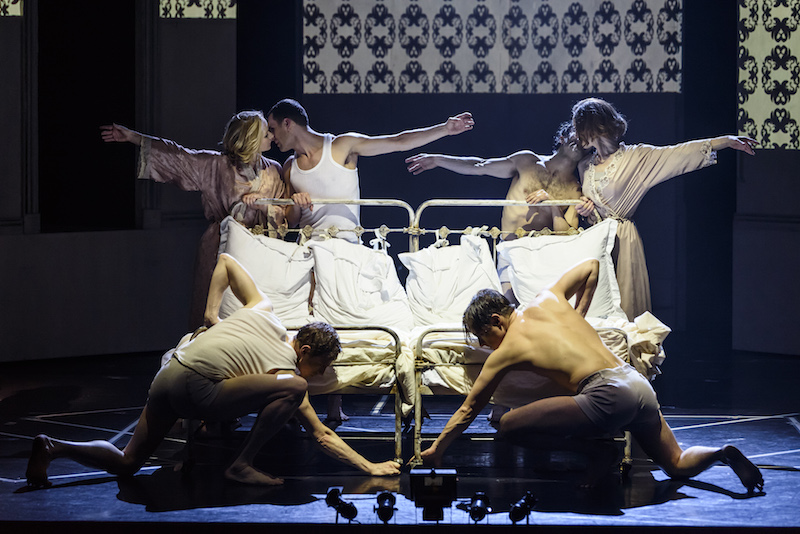
Layers and Permutations of Lises and Pauls -- Les Enfants Terribles, Barbican Theatre, 27-29 Jan 2017

Source - The Arts Desk, Bill Cooper

This piece confused me.

So I would have been fine if it was meant to be an eclectic pastiche of pretty sights and sounds. But with director cum choreographer Javier de Frutos intimating that each of the 4? 5? Lises and Pauls were supposed to represent different facets of this doomed sibling duo, I kept looking for deeper meaning in the clash of identities, only to constantly come up empty.

It was fairly simple at the beginning, where the different pairings of Lises and Pauls adopted much of the same characterizations, flirting innocently and then dangerously in the bathtub together. All pairs had the same costumes, the same props, the same steps, and I could deal with this nice colouring around the edges of each character, which was quite à la Matthew Bourne's Song Without Words. (de Frutos clearly has a knack for painting a scene with movement, able to deftly control the ebb and flow of motion, and accentuate subtleties in the score.)

But the moment Jennifer Davis and Gyula Nagy come on stage, singing Philip Glass' very literal libretto, they cannot help but strike an extremely different note from the dancers around them. Their threads of the storyline are transparent and pointed in a way that the dancers' motions cannot be, and so they end up drawing much of the attention. Thus as much as the publicity posters and the order of the curtain call try to tell me otherwise, Edward Watson and Zenaida Yanowsky are not the key players of this piece.

In some ways, I can see how they were designed to be so. Though Davis and Nagy are literal and obvious, they are flatter because of it. One can suppose that in contrast, Watson and Yanowsky represent the deeper and more fascinating subconscious of the characters that are both aware of and conflicted about the true danger of their game. Davis and Nagy portray childish petulance from start to finish, but Watson and Yanowsky express delicious love, malice, regret, despair, insanity. However all of this is shunned to the sidelines, obscured behind other performers, or simply done away with too quickly. Even when they are the highlight, their choreography is far too poised and statuesque to be as earthy and real as the characters they supposedly represent. So if they are indeed meant to be the richer body of the piece, this is done quite ineffectively.

Regardless, the question of who carries the meat of the storyline is moot by the end of the piece, because as time goes on each performer acquires such different movement, props, and costumes that keeping track of what the point of it all is becomes a bit hopeless. As such, my fancy flitted to the one stable character of the piece -- that is, Jean Marc Puissant's gorgeous set. It mostly comprises a fairly minimalist set of 5 sliding walls with modular steps, but onto these are projected beautiful displays that range from a whimsical sideways Eiffel tower during Paul's sleep walk, to a trypophobia-inducing collage of eyes during the children's first game. To be fair however, it does brink on over-busyness just like the rest of the piece -- where the performers are constantly shifting set pieces, picking up errant socks, or locking down a shaky wall mid-choreography. It was even the source of a full-on interruption of the performance on premiere night, where one wall piece wouldn't budge and the scene had to be repeated from the beginning.

All in all, maybe the point is to confuse. Or the point is to walk away flooded with a nice mélange of sights and sounds. But I can't help but think that with a story as poignant as Les Enfants Terribles, I should at least feel something by the end of it. And in particular, knowing what the combined dramatic prowess of Watson and Yanowsky might have done in different hands, the most coherent feeling I leave with is sadly one of disappointment.

Wednesday, January 13, 2016

Elizabeth

Every time I leave a ballet, I marvel at what it has done to me. Some do a little, the worst do almost nothing at all, but the best -- the very best -- render an undeniable transformation. I write reviews as some attempt to capture this change; it is a desperate compulsion I feel after each piece to explain what I have experienced, that I might process why it engaged me so, and perhaps even pen it in a way that someone else might engage vicariously. But in many ways there is a necessary structure to this, a manner of informative exposition that pithily captures what occurred on stage, but so poorly captures what occurred inside me.

As such, this review, I write for myself. But perhaps, it is written for you too. Here is what it feels like to watch Elizabeth.

The quiet before a performance is one of my most favourite parts. Almost anything can happen. And even if you know what's supposed to happen -- who enters when and what the choreography is -- this is the point at which you surrender judgment, logic, thought, experience. In the social contract of the theatre, you give yourself to the performers, and enter the unknown. Raphael Wallfisch takes his place in the darkness on stage right, and Zenaida Yanowsky, Sonya Cullingford, Laura Caldow, Julia Righton and David Kempster arrive at their opening positions centerstage. Then, just before the first word is spoken, the first note struck or the first movement made -- in Wallfisch's poised bow and Yanowsky's parting hands -- I see a glimpse of where they will take me and the thrill of it is nearly giddying.

The story quickly unfolds, and I take in everything that Will Tuckett is saying to me. The language is foreign and fast but I grow to decipher it. I learn to toggle my attention between dancer and actor; I learn to connect them with the ticks he has given both, where Cullingford and Yanowsky wring their hands in the same way; I learn his syncopation of the movement between Yanowsky and Carlos Acosta, where in solos and even in pas de deux, they always mirror or wait on the other's move -- discovering this means that Elizabeth and her lovers are always out of phase.

I learn it sooner than I realize, suddenly able to translate his movement into not only thought, but feeling. I'm grinning the way Yanowsky is as she coyly references her bedroom affairs, or frowning the way Acosta is as his proposal is rebutted. My whole body tenses as Yanowsky watches the she-wolf Lettice Knollys, relaxes as she finds a nook in Acosta's neck to rest in, then soars as he lifts her in a pas de chat across the stage. My body has found an empathy with the movement -- and with that comes a power which is no longer in the hands of the choreographer or performers. Empathy is the point at which the audience takes over to multiply every emotion seen on stage by a hundredfold, with the joy and pain we have had in our own lives.

It is the authenticity of the performer that can bring the audience here -- one who is selfless enough in their performance to give everything to a character, and in so doing, give it away. Some dancers take the journey alone, creating a vision that the audience can find beautiful and admirable, but cannot live. But that is not the case with these performers, and especially, especially, not with Yanowsky. They bring the entirety and gravity of the characters' intentions into every part of their body as they move. Merely a glimpse in their direction and I cannot tear away, caught in the wellspring of emotion they have triggered.

And just when I am most deeply in their hold, Tuckett brings the piece around full circle. This point exists in almost every piece -- a special juncture at which it turns around and reflects upon itself, ready to unravel its true meaning and bring the weight of its message down upon the audience. As Acosta and Yanowsky dance their last two pas de deux, they replay much of the same movements from their scenes before. Elizabeth tries to revive Devereux's limp body to hold her the way others had; Acosta kisses a dying Elizabeth's hand as Dudley did, bringing a final rejuvenation that gives her the peace to let go. The symmetry of these scenes are their source of amplification, echoing the depths of what Elizabeth has lost and learnt to live with. There is far too much to speak about in these final moments of the ballet, as the volume of emotion I have built up through its course collapses in on itself.

The time here is both incredibly cacophonous and incredibly quiet. In the intensity of the emotion I find a space I rarely have the chance to visit. Not in the daily goings on that move too fast for emotions to be had let alone understood, nor even in the times of reflection where trying to understand an emotion somehow distorts it. Here, in the darkness of the audience and the light of the stage, I feel like someone has shaken me by the shoulders and told me who I am. I feel like I have been asked many deep and piercing questions that I haven't had the time to process, and I have answered as viscerally as I can through emotions I did not know I possessed. I feel like my mind has connected to my heart through a path I never knew existed, sending a shock through the rest of my body. I feel I've been helped to finish a sentence I never thought I had to say.

And then the moment ends, the lights raise, and the magic is broken. Yet it is somehow even more magical to realize it was made by the human hands that take their curtain call in front of you. I am exhausted, content, exuberant, refreshed, and I leave the theatre somehow more certain of who I am.


Sunday, January 10, 2016

Elizabeth, Will Tuckett, Linbury Studio Theatre, 8/9 Jan 2016

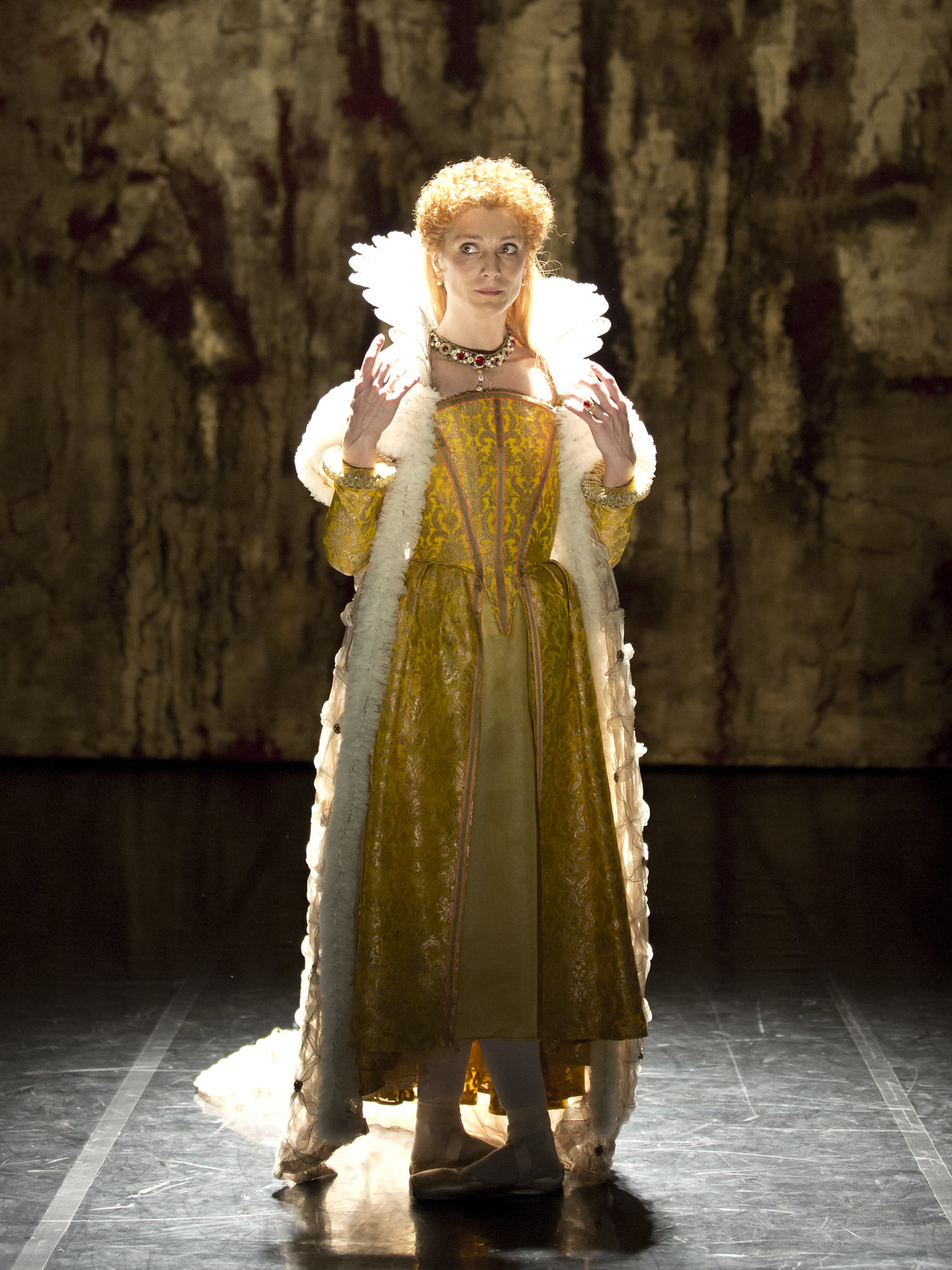
Zenaida Yanowsky in Will Tuckett's Elizabeth © ROH, 2016. Photographed by Andrej Uspenski
This winter, the dark and austere Linbury Studio Theatre is an unlikely window into a beautifully painted picture of the life of Queen Elizabeth. With a small but powerful team, Will Tuckett brings Elizabeth to life through a stunning trifecta of movement, music and text. 

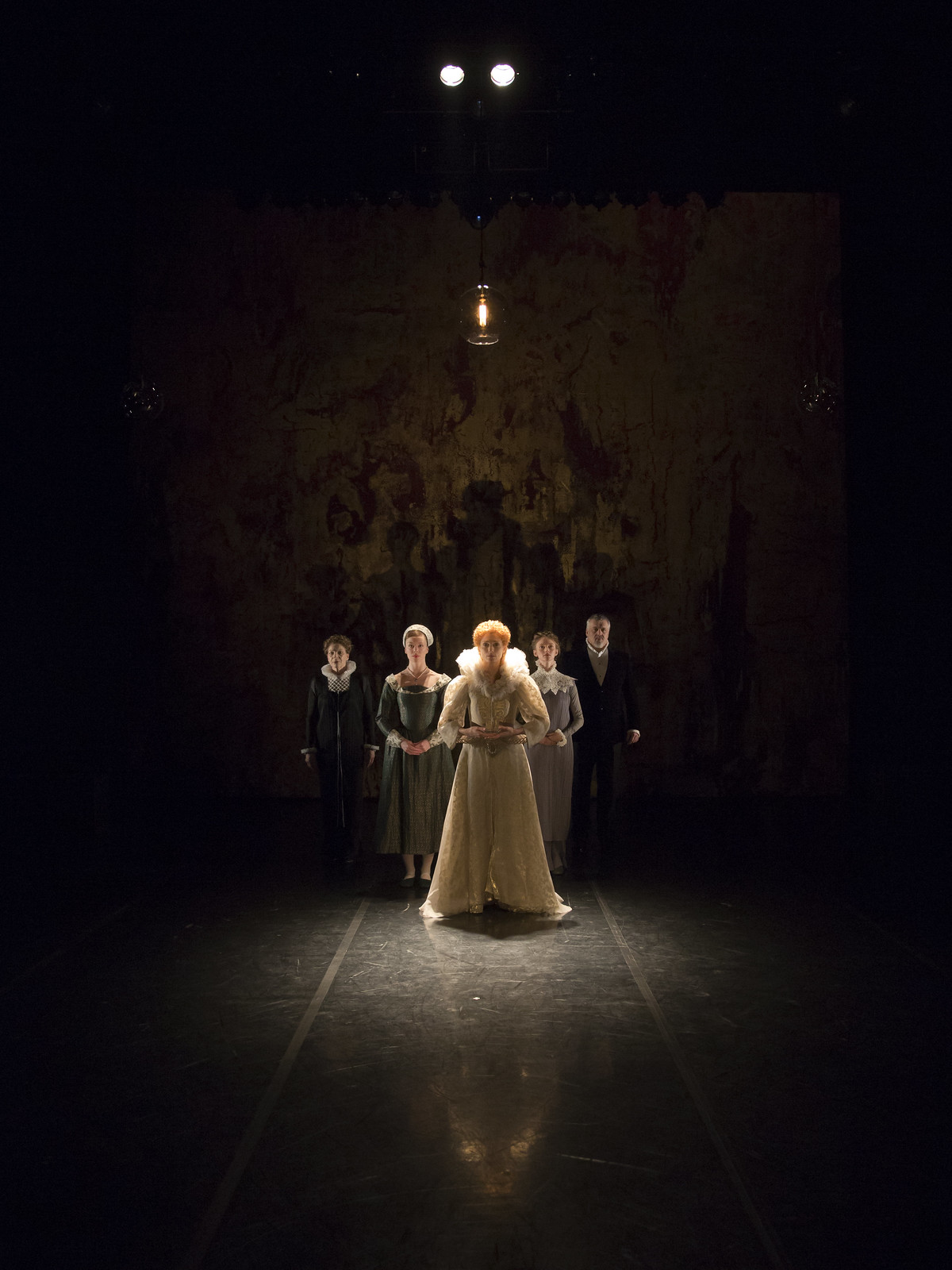
Zenaida Yanowsky fills the room with Elizabeth's regality from the moment the piece begins, pacing hastily onstage with her posse in tow. In her posture, expression and intricate regalia, she is an immediate queen. Yet this is swiftly undone as we dive straight into Elizabeth's last days. Laura Caldow, Sonya Cullingford and Julia Righton provide a powerful narration of Elizabeth's failing health and final lamentations of loves lost, which Yanowsky visualizes with desperate reaches, empty gazes and aching backbends. The portrait of a proud but exhausted and lovelorn queen emerges, as Tuckett lays the foundation to tell her story through the relationships that have tried her so. 

Scene by scene, we are taken through each affair -- from Robert Dudley, Earl of Leicester, to Duc D'Anjou of France, to Sir Walter Raleigh, to Robert Devereux, Earl of Essex. Carlos Acosta dances all of these in turn, instinctively infusing every character with a unique presence and style of movement. Dudley is warm and gentle towards Elizabeth, D'Anjou is foolish, Raleigh is pompous and Devereux severe. Acosta transitions effortlessly through this gamut of personalities, and whether he is curving his body with a shy and sheepish grin, or beating his chest with a rallying cry for rebellion, he is a consummate entertainer.

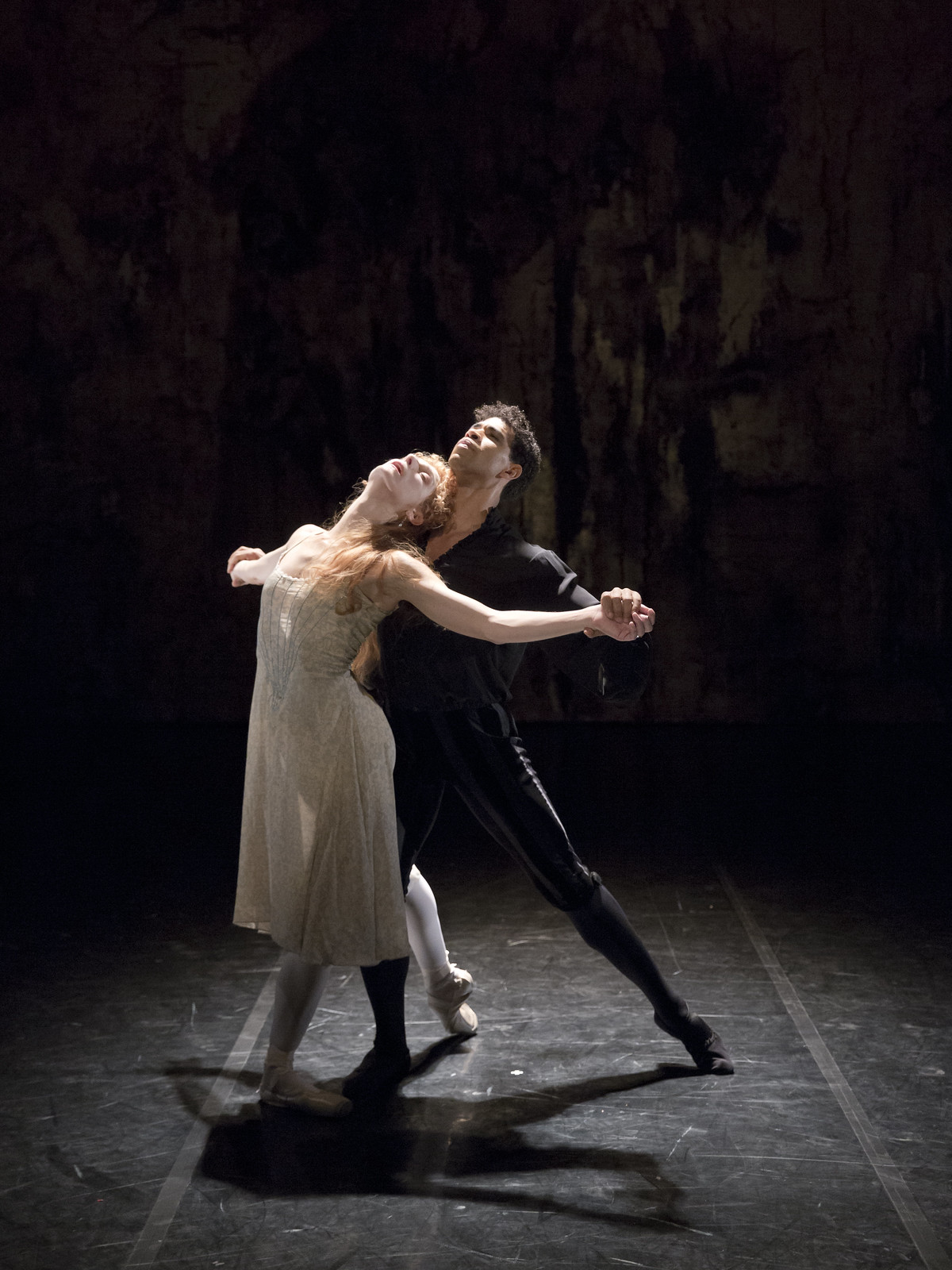
Zenaida Yanowsky and Carlos Acosta in Will Tuckett's Elizabeth © ROH, 2016. Photographed by Andrej Uspenski
Each of these men captures and breaks Elizabeth's heart in increasingly deeper ways. It is ever captivating to watch Yanowsky as she transforms Elizabeth through each transgression. At first she is young and love is trivial, shrugging off the notion of marriage and letting Dudley's betrayal slide off her back. She is above love -- wedded to her kingdom, as Cullingford narrates so, and Yanowsky casts an imposing silhouette caressing her coronation ring. But she soon succumbs deeply to love upon meeting D'anjou, whose charming and ingenue ways soften her heart, only to cripple it when he dies in battle. A beautiful change in the architecture of the piece happens here -- the older Righton takes over from Cullingford as Elizabeth's voice, the choreography loses all of its cheekiness, and Yanowsky becomes cold, serene and hardened. Elizabeth ages greatly with this loss.

Then, despite initial skepticism, she lets her guard down and welcomes Walter Raleigh into her life, who turns and betrays her through affairs yet again. And finally Devereux betrayes her through rebellion, forcing her to order his execution. This final loss fills her with regret, which we see embodied in a stunning pas de deux between Yanowsky and Acosta. Elizabeth revives Devereux's body, hoping wistfully to have compromised that she might have enjoyed love. Yanowsky's dancing is beautifully and painfully contradictory, filled with anger at both Devereux and herself, as she leans into Acosta then furiously pushes away. She ends with desperate kisses onto his body, only to have him die once more. The piece then bookends with the repetition of Elizabeth's own death scene.

The whole affair is a complete symphony for the senses. The actors narrate almost every move, such that the audience both sees and hears directly of D'anjou's innocence as Acosta leaps jovially, or is provided the voiceover for Elizabeth's thoughts as she rages at Raleigh's betrayal. Oftentimes it is extremely direct, with both actor and dancer standing side by side, delivering dialogue through both word and gesture. There is even the occasional interaction between actors and dancers, where Acosta and Yanowsky respond defiantly to information from the actors that both Dudley and Raleigh are married. Through this all, the music provides yet another level of narration, where the masterful Raphael Wallfisch on the cello raises the tension, or baritone David Kempster eases with his voice.

Zenaida Yanowsky and members of The Royal Ballet in Will Tuckett's Elizabeth © ROH, 2016. Photographed by Andrej Uspenski
Yet because of how complete it is, it is also lacking. Almost every thought and emotion is told to the audience, such that there is little left to infer, and because of that, little room through which one can dive deeper into the piece and have it engage deeply with one's soul. Dance, in particular, is something that typically leaves a huge space between then performer and the audience -- and the entire art form is then about the interpretation that is built therein. Even the performers themselves seem somewhat stunted, robbed of the ability to interpret a story in their own way, now that they are given a play by play of which expression to deliver. The most engaging were the pas de deux -- protected islands of just music and movement, that were prefaced by a concept in the text, but then richly interpreted in infinitely more dimensions through Acosta's and Yanowsky's powerful pairing.

Most of all, though appealing to the senses, there is no overwhelming reason in the piece to separate the dancers and actors so. If one was Elizabeth's inner voice and the other her outward personality, it may have made sense; if one the voice of reason and the other the voice of passion, that would have worked as well. Yet the decision of when to speak or dance each phrase seemed driven sadly arbitrarily, or worse, by whenever a water break or costume change was required.

As such, the piece is a beautiful one, but one that lives only in the space of 90 minutes, and leaves me quickly thereafter -- a hopeless contrast to my last visit to Covent Garden, which a year later, still resonates more strongly then the piece I left last night.


Friday, March 6, 2015

Variations on Odette: A Biomechanical Review of Swan Lake

After experiencing an amazing bout of ballet in 2014, I was inspired to put together the random skills I have, and offer a fresh perspective on the art form I love most. Friends also started asking about how one might begin to appreciate it, thus here is my best effort to do a very different kind of review -- a biomechanical review -- to lend both new insight and introduction to ballet!


What Makes a Swan Queen?
I have always loved classical ballet because of its fascinating duality. It is a highly structured art form, with a fixed vocabulary of steps that is centuries-old -- yet within this rigidity is in fact room for incredible flexibility, interpretation and artisty. Shades of variation exist in every performance that can make the audience's heart leap or gut clench, even in works like Swan Lake that has enthralled ballet-goers for 138 years.

What is it that makes every performance of Swan Lake unique? What makes one Swan Queen garner reviews such as "intensely dramatic", and another "touchingly vulnerable"? How can one dance "with bravura", versus "poise and subtlety"? How is it that audiences talk of discernible 'American' or 'Russian' or 'English' styles? My engineering insides hoped that Biomechanics would lend an answer (...perhaps because to a hammer, every problem is a nail!).


Tuesday, November 4, 2014

Manon, Zenaida Yanowsky & Roberto Bolle, Royal Opera House, 1 Nov 2014

1 November 2014 was truly a night to remember at the Royal Opera House. Ballets like this don't come around very often, and the cheering, stamping, standing audience at the end of the night knew it well. It was a night so amazing that it feels almost vulgar to pin it down to words and dare write about it, yet it must be preserved for posterity somehow.

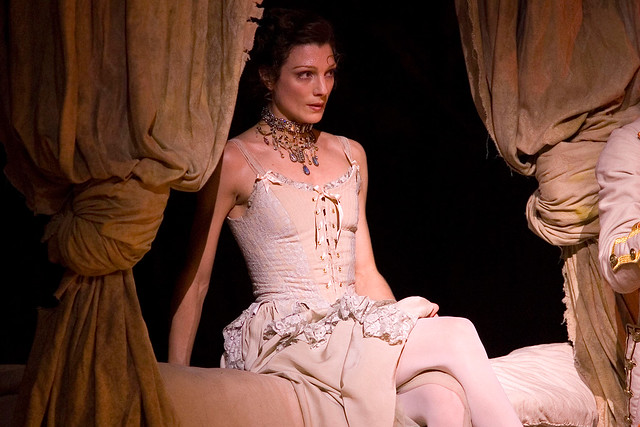
Zenaida Yanowsky and Roberto Bolle gave a performance that was beyond description. They wove a love between Manon and Des Grieux that was so earnest, intricate and captivating, keeping the audience breathless for every second they were on stage together. From the moment they locked eyes in Scene 1, they fell convincingly deeper and deeper in love with every step they took together. Where there might have been doubt about Wednesday's love, here their repeated stolen glances, nervous joy when finally they met, and triumphantly exuberant first pas de deux, all made their passion abundantly clear.

In fact not only were Manon and Des Grieux falling in love, but so it seemed Yanowksy and Bolle were as well. One could see their thrill exuding with every perfectly spun pirouette, and their confidence growing with every breathtaking lift and throw. They upped the ante with each verse of the music, giving more of themselves to each other. As Yanowsky leans into him more daringly at the end of each arabesque, or pushes more fervently off his hand for a spin, Bolle meets her touch eagerly, powerfully launching her off again then catching her with an ever dependable stability. As much as they are in perfect physical synchronization, accelerating and decelerating together through the nuances of the Massanet score, so are they emotionally, gasping and almost laughing as they play with each other, casting gazes that look longingly as if into each other's souls.

Such magic can only be created by two principals clearly at their prime. Sure enough in their impeccable technique years ago, every extra moment on stage has evidently gone towards building a formidable library of expression that they both wield profoundly. For Yanowsky, I know her prowess well, yet she gave a performance this night that was more real and textured than I've ever seen. Markedly more confident at the start than she was on Wednesday, she fires out of that carriage with a gust of innocent enthusiasm, that's nestled in many subtle glances of familiar joy with her brother or gentle eye rolling at his machinations. Then towards Des Grieux's love through the night, her world visibly stops the first time she sees him; she reverses the partnering in the bedroom pas de deux with such playful invitation; her body softens as she gives in to his anguished solo in Act 2. What was a rare and special treat as well was to see how differently she handled subtleties in this performance versus the last, showing how she is not only inventive but responsive as a dance actor.

For Bolle, my first viewing of him on stage was treated to a remarkably sensitive theatricality. He is less bold in his expressions than Yanowsky but that is by no means ineffective here. He is a shy and beguilingly earnest Des Grieux, whose gentle pirouette into a kneel at the end of his Act 1 solo was so endearing that I perhaps fell deeper in love with him than Manon did. And I was astounded by the way he handled his righteous morality in Act 2, where he perfectly balances his incredulousness at Manon's susceptibility to materiality, his desperate desire to have her see the light, and his anguished sorrow for failing to treat her with anything but tender care. Thus in their combined maturity and thoughtfulness, that interacted so as to be more than the sum of its parts, the audience had no choice but to fall into their world, and both cherish then suffer together in their torturous emotional journey.

The rest of the stellar cast seals the deal. Laura Morera turns what could have easily been a token foil into a character with deep complexity, and it's a shame that much of this is seen best at the fringes of the stage. She is resilient despite Lescaut's callous treatment, and dedicated in her cautioning Manon against her dangerous materialistic descent. Carlos Acosta is delightful again as Lescaut, perhaps even more on point with the comedic timing, and more calculating in his dealings with Monsieur GM than the last night. And to his credit, Will Tuckett is downright repulsive as GM. One somewhat bone-chilling moment is when in the Act 2 pas de trois, Manon's skirt falls accidentally over his face. Once he finds his way out of it, he has an unexpectedly frightening look of satisfaction. Finally, Gary Avis is perhaps more ruthless as Gaoler, and paired with Yanowsky's all too realistic acting, I believe my heart actually stopped beating then. The energy was as infectious to the audience as to the entire cast, with every slight display of dancing or acting rich and provocative. I lament with other viewers that there was simply too much to see in this ballet!

As the evening wends its way to the final swamp pas de deux, the magic is unassailable. Here Yanowsky and Bolle cap the performance of a lifetime, hurtling themselves at each other in yet another profound showing of technical and emotional excellence. She limps about the stage then sets her eyes on him, is renewed with vitality, and runs full tilt for the clean perfection of one, two, three spins, to be brought lovingly back down by him. He pushes her head up carefully with his shoulder, then finds her dead with a pang of shock that reverberates through the auditorium, and he clutches her visibly mouthing "Manon, Manon."

It's back to Singapore for me, but this time I left my heart in Covent Garden.

Friday, October 31, 2014

Manon, Zenaida Yanowsky & Matthew Golding, Royal Opera House, 29 Oct 2014

Wednesday's penultimate Manon marked the return of Zenaida Yanowsky to the role -- a French courtesan beguiled by love and money, toward a tragic end. That role for which she won unanimous enthusiastic reviews in her 2005 debut, and which she herself's been eagerly waiting to reprise. That role which has thus become my holy grail of ballet -- ever since first chancing upon her in Sylvia March of '08, then reading about all her past performances, desperately going WHO IS THIS WOMAN.

The evening had been padded very nicely in advance. Roberto Bolle cast as her Des Grieux and Carlos Acosta debuting as her Lescaut -- a winning formula that sold out. But at the last minute, literally a day before, Matthew Golding had to replace Bolle due to a hand injury visible in their rehearsal -- hopefully, in a bid to save him for their Nov 1 performance (we'll see how it goes tomorrow..!). [Edit: one word - phenomenal.]

As a result I wasn't sure what to expect on Wednesday. I had faith Yanowsky would more than deliver the emotional goods (extravagant plane-ticket-to-London-for-2-shows-faith) but with the change I wasn't sure how everything would gel together. Golding was apparently fantastic with Melissa Hamilton weeks before, but my memory of him and Yanowsky in Bayadere 2013 was really nothing outstanding -- and true enough, their characters' love turned out to be as inconceivable to me then as this time around. Yet instead of marring the show, which for a time the audience and I really thought it might, it ended up making for such a spectacular take on the ballet instead -- one that was no less emotional and heart wrenching. Here Des Grieux is more plot device than protagonist, as the story shifts its focus to Manon's own internal journey through the vicissitudes of a life she's done her best to make do with, but never escapes.